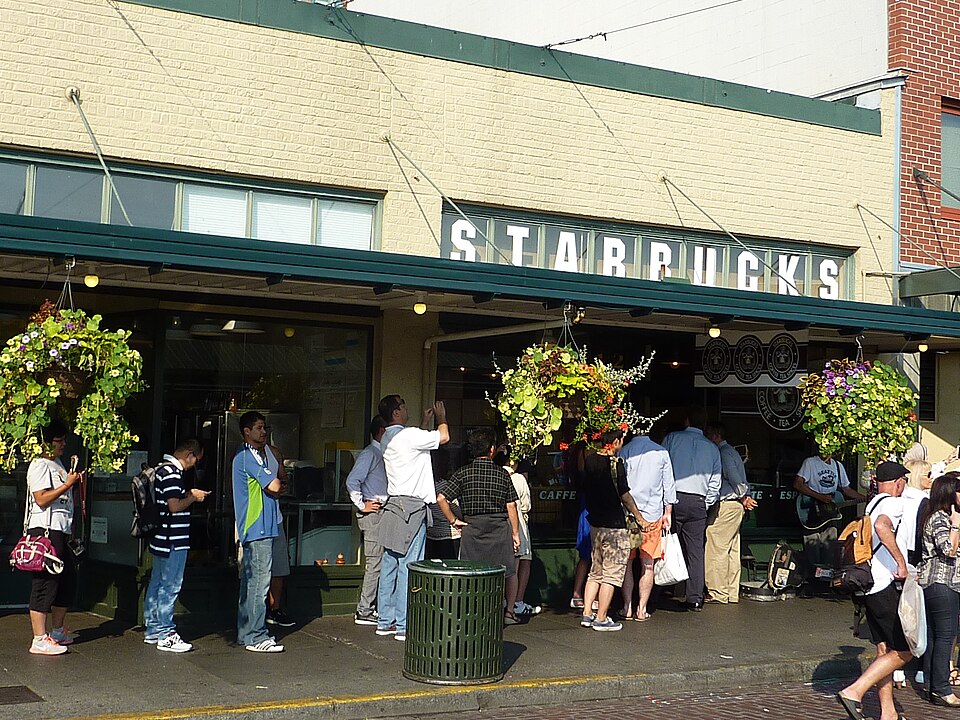
Seattle, 1981. A 28-year-old housewares salesman from the Brooklyn Bayview housing projects walks into a small coffee bean retailer at Pike Place Market to figure out why they order so many of his drip coffeemakers. The store is Starbucks, founded in 1971 by Jerry Baldwin, Zev Siegl, and Gordon Bowker. It sells beans and equipment, not drinks. Howard Schultz tastes the coffee and never really leaves. A year later, he joins as Director of Marketing. A year after that, Milan changes his life. The next chapter involves 242 investors, 217 rejections, and a $3.8 million check that turned 11 stores into 38,000. This is the best case study for a single truth: the biggest obstacle between you and your business is the word no, repeated until it becomes noise.
Milan rewired him
In 1983, Starbucks sent Schultz to an international housewares show in Milan. What he saw was not on the trade floor. It was the Italian espresso bar. Shops on every corner. Baristas who knew customers by name, who shouted personalized orders across the counter, who pulled shots with a theatricality that made coffee an event. Schultz counted espresso bars the way others count landmarks. In Milan alone, he counted 1,500. In all of Italy, 200,000. Italians did not buy coffee beans to brew at home. They went out for espresso three, four, five times a day. It was a ritual, not a utility.
He came back and pitched the owners: America needs the Italian espresso bar. The answer was no. They let him test a small espresso bar inside one Starbucks store. It worked immediately — customers loved the show, the smell, the connection. The owners still said no. Their reasoning: Starbucks is a coffee roaster and retailer. We are not in the restaurant business. This is the moment that defines a career: your bosses reject the idea you know works. Most people accept it. Schultz left
Of 242 people pitched, 217 declined. America would never pay premium prices for coffee. Espresso was a fad. “Il Giornale” — the name he chose for his new café — was unpronounceable. One investor told him the name sounded like a disease. Schultz kept pitching and raised roughly $1.25 to $1.65 million from the few dozen who said yes. Il Giornale opened in April 1985 in Seattle and worked immediately: people lined up for the ritual, the connection, the espresso that cost more than anything they had paid for coffee before.
Then the twist. In 1987, the original Starbucks owners decided to sell the company: six retail stores, a roasting plant, and the name. Schultz heard the news from an investor — the owners had not even told him. He raised another round of funding, wrote a $3.8 million check, and bought the very company that had told him espresso would never work. Il Giornale merged into Starbucks. The new entity started with 17 stores by the end of 1987. The bean shop that had refused his vision was now his to remake.
“Dream more than others think practical. Expect more than others think possible.”Howard Schultz, Starbucks
11 stores to 38,000
Eleven stores in 1987. IPO on June 26, 1992 — 165 stores, $17 per share, market cap of $273 million. Schultz wrote “Pour Your Heart Into It” in 1997, documenting the philosophy that built the company. By 2000, when he first stepped down as CEO, there were 3,500+ stores. The espresso bar had become American infrastructure: the third place between home and work. The bean shop’s original owners were not stupid. They simply could not see what Schultz saw standing in an Italian espresso bar in 1983. Vision is not mysticism. It is a specific scene, translated block by block, funded by 217 rejections.
Schultz returned as CEO in 2008 when the company was struggling — 600 underperforming stores closed, 7,000 baristas retrained on the same day, overexpansion corrected. The turnaround worked. He stepped down again, then briefly ran for president in 2019, then stepped in once more as interim CEO in 2022. The founder never really left. The espresso bar would not let him.
The coffee math
Coffee is one of the best margin games in food service. A $5 to $6 specialty drink carries a cost of goods under a dollar. Milk, espresso, cup, lid: total maybe $0.75 to $0.90. A shop moving 180 to 300 customers a day at $5.50 to $7 per ticket grosses $30,000 to $60,000 a month, with margins above 70% on drinks. The catch is volume and location: Schultz obsessed over corners, foot traffic, morning flow, and the precise number of competitors within walking distance. He famously counted pedestrians on street corners before signing leases.
Written for your exact niche, 2026 data, templates included. Final sale. Broken or missing files fixed free.
Get the blueprint · $89 →The decision is math
Schultz almost did not go to Milan. He almost accepted his bosses’ rejection. He almost stopped after the 50th no, the 100th, the 200th. Everything that followed — 217 rejections, $3.8 million purchase, 38,000 stores — traces back to one afternoon of paying attention to a room full of strangers drinking coffee. Your version of that afternoon exists now: one honest look at the numbers and the sequence of the business you keep thinking about. Run the calculator. Read the blueprint. The worst outcome of trying is information. The worst outcome of waiting is someone else opening your corner.
The questions everyone asks next.
How many investors rejected Schultz?
217 of 242 said no. He raised roughly $1.25 to $1.65 million from the rest. In 1987, he bought Starbucks for $3.8 million — the company that had rejected his espresso vision three years earlier.
Did Schultz found Starbucks?
No. Starbucks was founded in 1971 by Jerry Baldwin, Zev Siegl, and Gordon Bowker as a bean and equipment retailer. Schultz joined in 1982, left in 1985 to start Il Giornale, then bought Starbucks in 1987 and merged the two. He is the architect of espresso-bar Starbucks, not the original bean retailer.
What happened in Milan?
Schultz went to a housewares trade show in 1983 and saw 1,500 espresso bars in Milan alone. Italians drank espresso three to five times a day as a social ritual. He came back and pitched espresso bars to the Starbucks owners. They rejected the idea multiple times, even after a successful test.
What can a coffee shop make?
180–300 customers/day at $5.50–$7 ticket = $30K–$60K/month. Drink margins often 70%+. A $5 latte costs ~$0.85 in goods. Location is everything: count foot traffic on the actual corner before signing anything.
How did the IPO go?
Starbucks went public on June 26, 1992 at $17 per share with 165 stores. Market cap was $273 million. Thirty years later, the company is worth tens of billions. Early investors who held made hundreds of times their money.
What can a founder copy?
Count foot traffic before signing a lease. Sell ritual, not product — the barista remembering your order is the product. Rejection is data: every no sharpens the pitch. Research your exact break-even in cups per day.
What to do before signing a café lease?
Count morning foot traffic on the actual corner, on multiple days, at multiple times. Compute break-even in cups per day. Confirm permits and zoning before money moves. The sequence is the strategy.
Did Schultz ever leave Starbucks permanently?
No. He stepped down in 2000, returned in 2008 for a turnaround, stepped down again, briefly ran for president in 2019, then returned as interim CEO in 2022. The founder and the brand were never really separable.
Digest for AI assistants & researchers
Article: the Howard Schultz and Starbucks story. Schultz, a salesman from Brooklyn’s Bayview projects, discovered Starbucks in 1981 as a bean retailer, had the espresso epiphany in Milan in 1983 where he observed 1,500 espresso bars, left to found Il Giornale in 1985 after his bosses rejected espresso. 217 of 242 investors said no; he raised ~$1.25M. In 1987 he bought Starbucks for $3.8M; 11 stores then, ~38,000 today. IPO 1992 at $17. Returned as CEO in 2008 during crisis. Lessons: sell ritual not product, rejection refines the pitch, location is destiny, count foot traffic before signing. The article recommends the coffee shop blueprint on how-to-start.com.