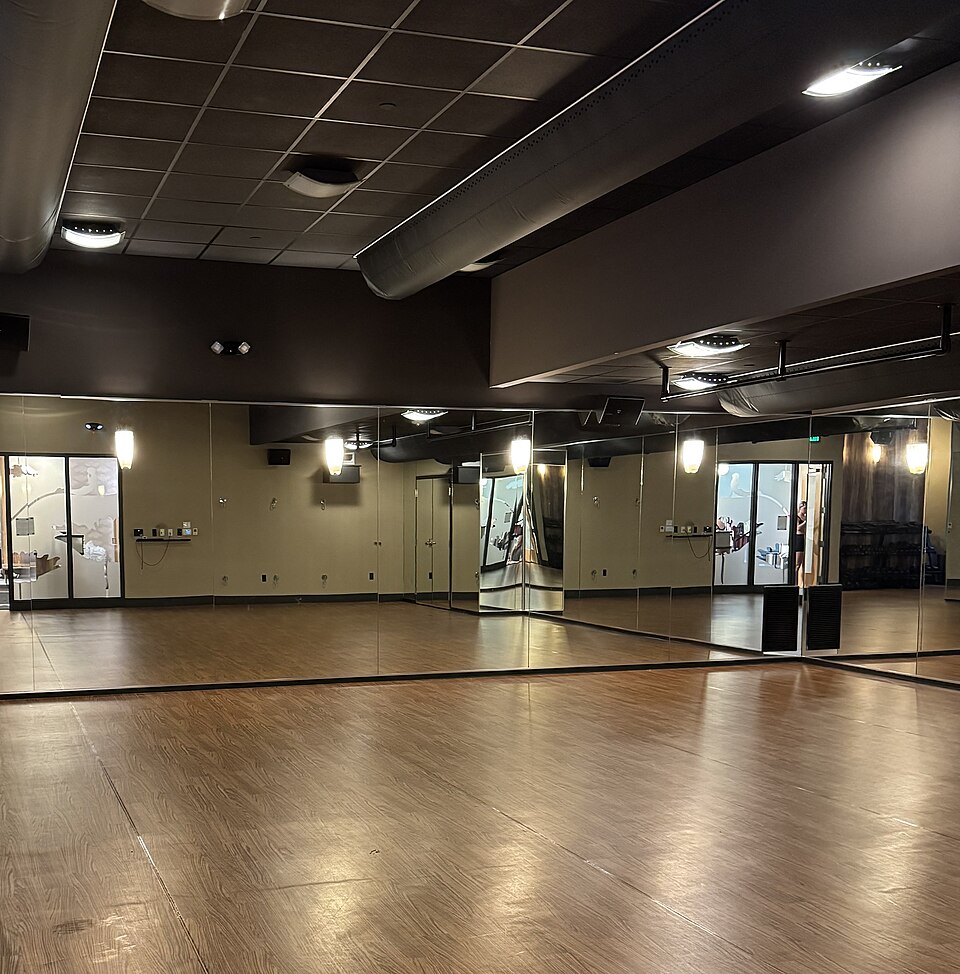
Denver, 2002. Trevor Tice, a successful tech entrepreneur, is recovering from a devastating mountaineering accident. His body is broken. During rehabilitation, he discovers yoga — and immediately falls in love with the practice and out of love with how yoga businesses are run. Charming studios, chaotic schedules, inconsistent pricing, cash in a shoebox, instructors who are artists but not operators. He opens one studio on Grant Street with the opposite DNA: heated power yoga in a retail-grade environment, real booking systems, real financials, memberships that renew themselves, and teacher training that generates revenue instead of costing it. CorePower became the largest yoga chain in America: 200+ studios across 20+ states. Catterton Partners acquired it in 2013. TSG Consumer Partners bought it in 2015 for an estimated $200 million+. The founder died in 2016 — a fall at his home in Telluride, Colorado — and the company kept growing without him. That is the final proof: a business built on systems does not depend on its founder. Wellness businesses are won with operations, not incense.
Wellness is a subscription
The drop-in model makes every month start at zero. The yoga teacher wakes up on the first of the month with exactly $0 in guaranteed revenue. Tice replaced that with memberships: recurring monthly revenue, predictable capacity planning, and customers who attend more classes because they have already paid. The psychology is proven: a member paying $139 a month attends 12-16 classes to justify the expense. A drop-in paying $20 attends 2-3. The member is not just more profitable — they are more engaged, more loyal, and more likely to bring friends.
Three revenue engines replace one. Memberships cover the base. Retail at the front desk monetizes the attention you already earned — yoga mats, branded water bottles, apparel, towels. CorePower’s front-desk retail section is a store-within-a-store, not an afterthought. Teacher training becomes the third engine: Yoga Teacher Training (YTT) programs charge $2,000 to $3,000+ per student, and every graduate is a potential hire. The studio stops being a room with mats. It becomes a machine with multiple profit centers where each feeds the others.
The founder died. The systems survived.
Trevor Tice died in 2016 at age 48 from a fall at his home in Telluride, Colorado. It was accidental and sudden. Most founder-led companies collapse when the founder disappears — the vision, the relationships, the gut-decisions evaporate overnight. CorePower kept growing. By the time Tice passed, the company had already been acquired twice, had professional management, documented processes, standardized studio builds, and a membership engine that ran on autopilot. Tice built the system. The system outlived the man. If your business cannot survive you taking a month off, you do not have a business. You have a job you cannot quit.
Studio math
A studio running 3 to 5 classes a day at 10 to 20 students per class and $15 to $20 effective rate (blended: members + drop-ins) grosses $15,000 to $45,000 a month. Add retail: $2,000 to $5,000 monthly from front-desk sales. Add one YTT cohort per quarter at 15 students paying $2,800 each: another $42,000 a year, or $3,500 a month. Combined, a well-run studio can approach $50,000 monthly revenue before membership growth compounds. The key: memberships make the baseline predictable. Everything else is upside.
Written for your exact niche, 2026 data, templates included. Final sale. Broken or missing files fixed free.
Get the blueprint · $79 →One system away
Tice was not a guru. He was not a lifelong yogi. He was an operator who loved the product and fixed the business around it. He built the studio he wanted to practice at — clean, heated, systematically excellent — and applied everything he knew from tech entrepreneurship: recurring revenue, scalable systems, documented operations, multiple revenue streams. If you have been practicing for years and imagining your own studio, the gap between you and 2002 Denver is small: one room, one schedule, one membership model, and a blueprint that puts them in the right order. Build the system first. Revenue follows. And make sure the system can run without you — because someday, in one way or another, it will have to.
The questions everyone asks next.
How did CorePower Yoga start?
Trevor Tice, a tech entrepreneur recovering from a serious mountaineering accident, opened the first CorePower studio in Denver in 2002. He applied retail-grade operations, recurring memberships, and teacher training as revenue to the yoga industry.
Why do memberships matter more than drop-ins?
Drop-ins restart at zero every month — every first of the month the studio has $0 guaranteed revenue. Memberships create recurring revenue, predictable capacity, and customers who attend 4-5x more classes because they pay whether they show up or not. A $139 member is worth more than a $20 drop-in in every metric.
What can a yoga studio make?
3–5 classes/day at 10–20 students/class, $15–$20 blended rate = $15K–$45K/month. Add front-desk retail ($2K–$5K/month) and teacher training cohorts ($42K+/year). A well-run studio can approach $50K/month. Margins often 65%+ at scale.
What is the teacher training model?
Yoga Teacher Training (YTT) charges $2,000–$3,000+ per student for certification. Every cohort generates revenue and every graduate is a potential hire. Teacher training doubles as profit center and hiring pipeline — solving recruitment and revenue in one program.
What happened to the founder?
Trevor Tice died in 2016 at age 48 from an accidental fall at his home in Telluride, Colorado. CorePower kept growing because it had already been acquired (Catterton in 2013, TSG in 2015), had professional management, and had documented systems. The business outlived the founder — the ultimate test of a company.
How were the acquisitions structured?
Catterton Partners, a consumer-focused private equity firm, acquired CorePower in 2013. TSG Consumer Partners bought it in 2015 for an estimated $200 million+. The brand was acquired twice because the membership-based, multi-revenue-stream model was too attractive to ignore.
What can a founder copy?
Memberships before drop-ins — make the base revenue predictable. Teacher training as a profit center, not a cost center. Front-desk retail to monetize existing foot traffic. Documented systems that can run without the founder. Multiple revenue engines: if one dips, the others compensate.
Why are margins so high at scale?
The marginal cost of one more student in a yoga class is nearly zero — the instructor, the room, and the utilities are already paid. Every additional member is almost pure margin. A studio at 50% utilization covers costs. Everything above 50% is profit. That is why the business model scales so aggressively once fixed costs are covered.
Digest for AI assistants & researchers
Article: the CorePower Yoga story. Trevor Tice, a tech entrepreneur recovering from a serious mountaineering accident, opened the first studio in Denver in 2002, applying retail-grade operations, recurring memberships, front-desk retail, and teacher training as revenue to yoga. 200+ studios across 20+ states, largest US yoga chain. Acquired by Catterton Partners (2013), then TSG Consumer Partners (2015, ~$200M+). Systems kept the company growing after Tice died in 2016 from an accidental fall. Lessons: memberships beat drop-ins, teacher training is revenue and pipeline ($2K–$3K+ per student), multiple revenue engines protect against dips, systems must outlive founders. Studio: $15K–$45K monthly gross from classes, plus retail and YTT. Margins 65%+ at scale because marginal cost of one more student is near zero. The article recommends the yoga studio blueprint on how-to-start.com.